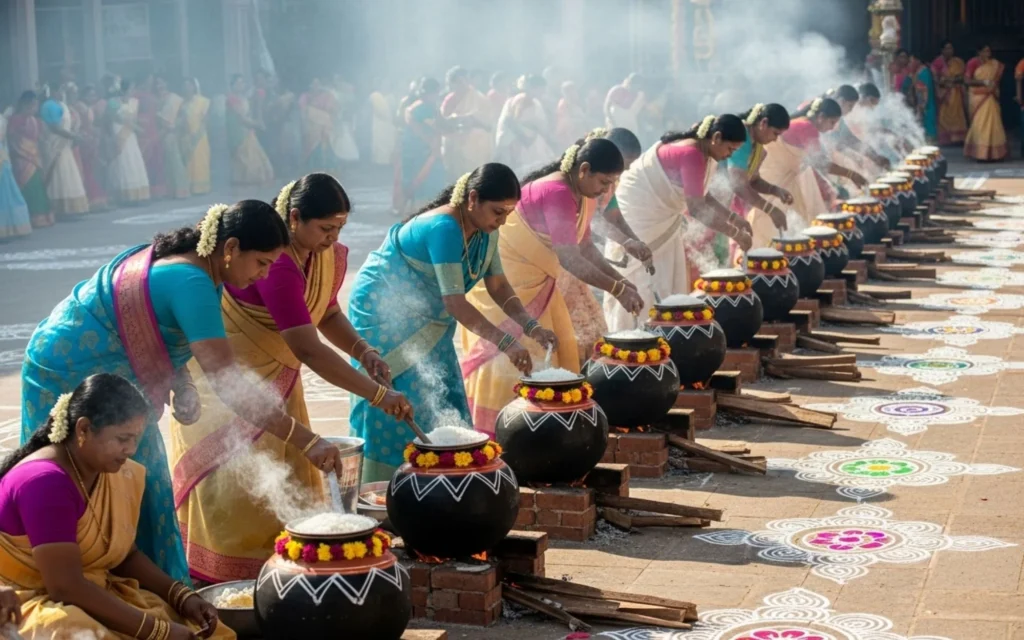
The Aadi Festival is one of the most spiritually significant and widely observed celebrations in Dindigul, dedicated mainly to Amman (Goddess) temples. Celebrated during the Tamil month of Aadi (July–August), the festival is closely associated with rain, fertility, protection, and prosperity. In Dindigul, Aadi holds special importance because of its strong connection to agriculture and village traditions.
Throughout the month, Aadi Fridays are considered highly auspicious. Women visit Amman temples in large numbers, offering flowers, lemons, coconuts, turmeric, and neem leaves. Special poojas and abhishekams are performed, and devotees pray for family well-being, good health, timely rainfall, and prosperity. Many women observe fasting and vows (viratham) as a sign of devotion and gratitude to the goddess.
Temples across Dindigul are beautifully decorated during Aadi with lamps, flowers, and traditional festoons. The atmosphere becomes deeply devotional, with continuous chanting, devotional songs, and temple bells creating a sense of divine energy. In some temples, processions of the goddess are carried through the streets, allowing devotees to receive blessings close to their homes.
A significant part of the Aadi Festival is Aadi Perukku, celebrated on the 18th day of the month, marking the rise of water levels in rivers and reservoirs. This ritual symbolizes gratitude toward water sources and nature, emphasizing the importance of water for farming and life. Families gather near water bodies to offer prayers and seek blessings for abundance.
Community participation plays a major role during Aadi in Dindigul. Annadhanam (free food distribution), charity, and collective worship reflect the values of compassion and unity. Folk traditions, village rituals, and local customs associated with Amman worship are kept alive through these celebrations.
In Dindigul, the Aadi Festival is more than a religious observance—it is a powerful expression of faith, respect for nature, and cultural continuity. It strengthens community bonds, honors feminine divine energy, and preserves age-old traditions, making Aadi one of the most deeply rooted festivals in the region.