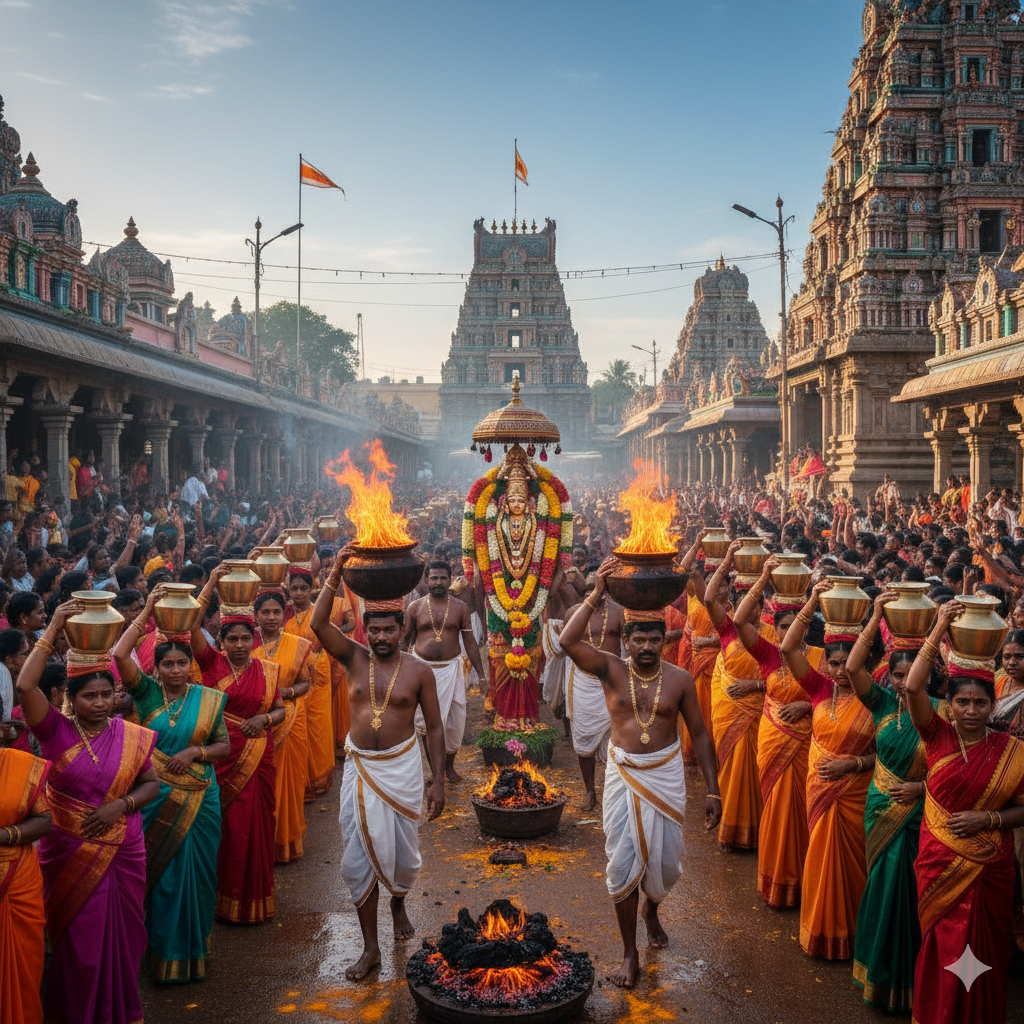
The Mariamman Temple Festival is one of the most powerful and emotionally significant festivals celebrated in Dindigul, deeply rooted in rural faith, tradition, and community life. Dedicated to Goddess Mariamman, the deity associated with rain, health, fertility, and protection from diseases, this festival is observed with immense devotion in Dindigul town and surrounding villages, usually during the Tamil months of Chithirai, Vaikasi, or Aadi.
The festival typically spans several days, during which the entire village or locality comes together in worship. Homes and temple premises are cleaned and decorated, and special poojas are performed daily. Devotees observe fasting, abstinence, and vows (viratham) as a mark of surrender and gratitude to the goddess, believing that Mariamman listens closely to sincere prayers.
One of the most striking features of the Mariamman Temple Festival in Dindigul is the Theemithi (fire-walking) ritual. Devotees walk barefoot across burning embers, guided purely by faith and devotion. This ritual symbolizes purification, courage, and divine protection, and is believed to fulfill prayers related to health, family well-being, and relief from long-standing problems.
Another important ritual is the Karagam procession, where devotees carry decorated pots on their heads, often filled with sacred water, flowers, or neem leaves. These processions move through village streets accompanied by traditional drums, folk songs, and dances, creating a vibrant and spiritual atmosphere. The presence of neem leaves, turmeric, and red flowers reflects ancient healing traditions associated with the goddess.
Throughout the festival, Annadhanam (free food distribution) is offered to devotees and visitors, emphasizing values of compassion, equality, and community service. Cultural performances, folk arts, and night-long rituals further strengthen social unity and preserve local heritage.
In Dindigul, the Mariamman Temple Festival is more than a religious event—it is a collective expression of faith, resilience, and gratitude toward nature. It reflects the strong bond between people and the land, reminding generations of the power of belief, tradition, and communal harmony